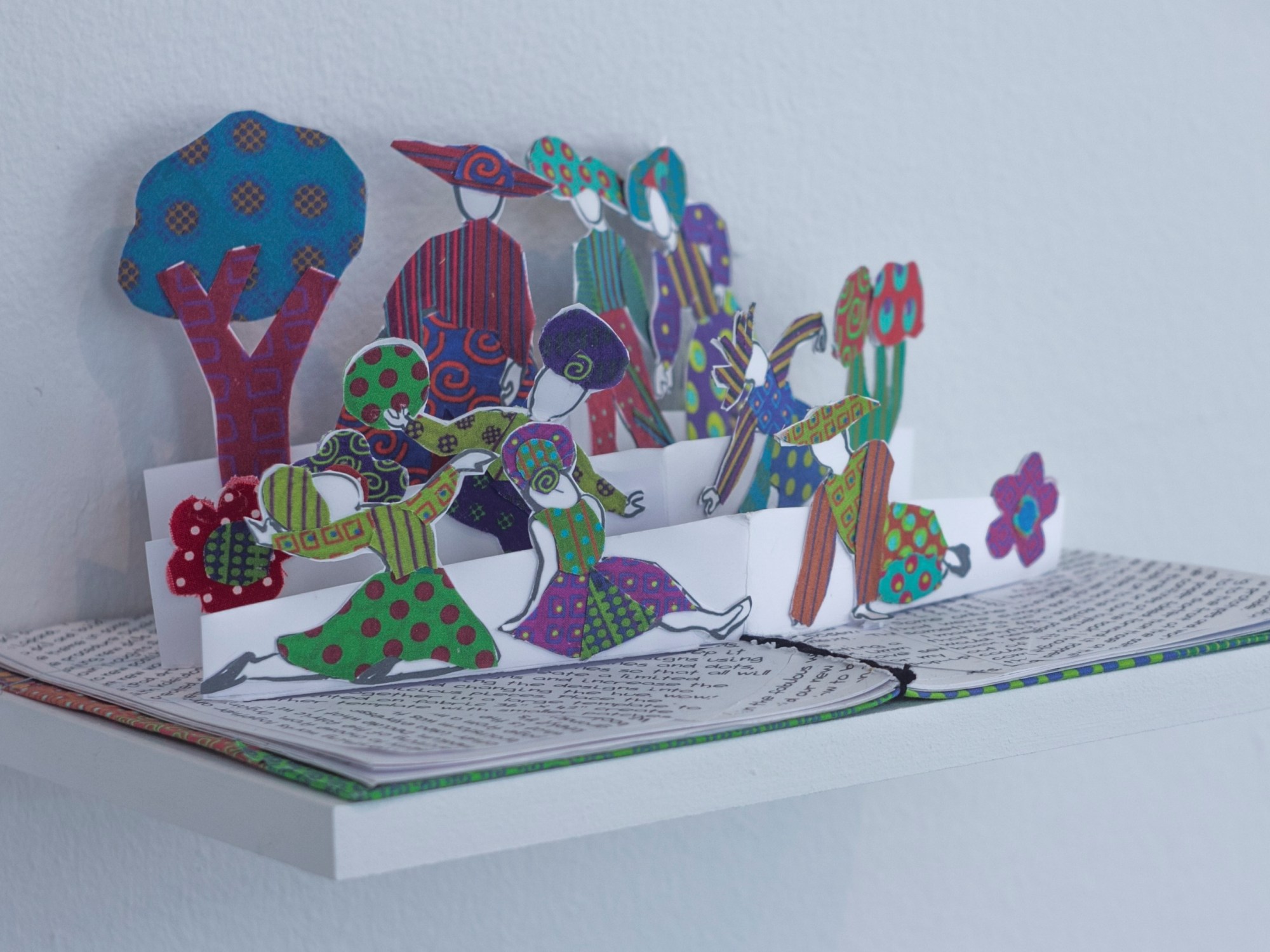
‘Conversations with the Edge’ is an artist collaboration that was born by the Fibrespace Incorporated group of South Australia. Fibrespace is a regionally based art collective and with this initiative, aimed at creating new connections with similarly marginalised art communities in Lapland, Finland. This collective collaborated with Margin-to-Margin artist-researchers in realising this initiative.


This innovative research and art project, Margin to Margin, approached collaboration from a unique perspective, avoiding any prescriptions or expectations for the communities. Instead, the communities themselves designed and prepared the interventions. In Australia, one of the artist-researchers collaborated with an Arts Officer in the Far West region of South Australia to organise an intervention with the Aboriginal Anangu and other South Australian artists around textile art making in Fowlers Bay. The Fibrespace Incorporated textile group from Port Augusta designed another activity that included a fibre art workshop at the Platform Gallery in Port Augusta. In Rovaniemi, Finland, the art-research intervention included a workshop and seminar with professional art practice researchers and design research students from various global locations and Universities. In contrast, the activities at MASU in Murmansk were designed by the project’s lecturers. This means that this art and research project followed a bottom-up approach to community participation, offering participants the opportunity to orchestrate and design according to their own choice. The different projects were not only successful local interventions, but they also offered participants the ability to process marginalities in multiple ways, thanks to the global element this research and art project provided, from margin to margin.
This collaborative approach stimulated empowerment as the meaning of ‘working together’ permeated all project levels, including project design, allowing for a more balanced situation to emerge where both participants and researchers had to cope with the familiar and unfamiliar. In this way, new possibilities and data emerged as the researchers had to step into unfamiliar contexts alongside the research participants. For working and research processes to succeed, the artist-researchers had to embrace improvisatory approaches, in which agility —the ability to think on their feet — to establish connective and multidirectional processes played a key role. Although the researchers guided the recording, documentation, and representation of the participants’ stories, some participants also collaborated with the artist-researchers in representative activities, such as writing and publishing online media, and the creation of exhibitions.
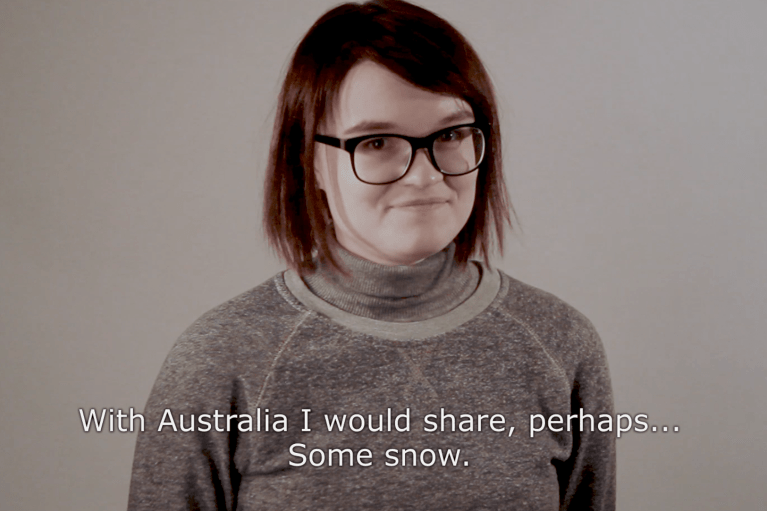
One example of a collaborative project that featured multi-layered artefact making and narrative outcomes was the project “Conversations with the Edge.” Initiated by the Fibrespace Inc. textile art group in South Australia, this project aimed to elicit a response by sending personal artefacts or notes to artists in Lapland and elsewhere. The group created a selection of artefacts which were then presented to the participants in Rovaniemi and Murmansk. The response to the Fibrespace artists was unexpected as they not only received artefacts, but also a video message from community to community was initiated in Rovaniemi, in which spoken messages were captured and sent to the respective communities. The narratives of the participants, in both the artefacts and video messages, were constructed around the notions of belonging, home and place. Specific artefacts and messages strongly narrate personal identity through the artefacts themselves, their making processes, and personal margins, as well as overcoming them.
Participants commented:
‘This was a new experience. I guess as I’m getting older, I am more open to new experiences, learning something new, and exchanging. I was always interested in other people and why they do things and how they do things and so on.’ (participant, Port Augusta, 2016)
‘It is not something just written like “Hello” and “How are you”, because you can do it on Facebook. If people receive something material that you made with your hands, it is different, because you send your warmth to another person, and maybe your love or the mood you were in while you made it. From this bookmark, I made the person who received it remember me while reading.’ (participant, Murmansk, 2016)
‘I am originally from the south of Finland, but I have lived in Rovaniemi now for four years. What I like about Finland is working together and creating great things together. That is what I want to take to Murmansk, but it is a hard question, because I know nothing about Murmansk.’ (participant, Rovaniemi, 2016)
‘The feeling I got from the whole (Fibrespace) group was that this is what they want to do to reach out to artists in Lapland – or anybody really. I think this was a bit of doing it the Aussie way. You know, we can wait forever to make it happen, or we can make the first move. Let’s just do it. Let’s make something and send it, and see what happens, and that was that, really. The idea was to say something about ourselves and of who we were as artists, and for me that was the challenge – to go and think about it and make a piece that portrays just that.’ (participant Port Augusta 2016)
‘What I like is the peace and quiet. I want to bring to Murmansk the silence, the atmosphere, and the boats that whistle on the lake. I live near a harbour where I can see the boats going past on the lake.’ (participant, Rovaniemi, 2016)
Melanie Sarantou
Artefacts by Fibrespace Inc., Students from Murmansk Arctic State University and artists from Finland and Lapland.
Photography by Daria Akimenko
Video by Nuno Escudeiro
 margintomargin
This sums it up well xx
LikeLike
A very exciting experience to be a participating artist. It has enabled me to understand life and living in the other countries involved in ‘margin to margin’ and really great to make new friends and share some of their family and artistic events. We are so fortunate to be able to share in this digital form.
LikeLike