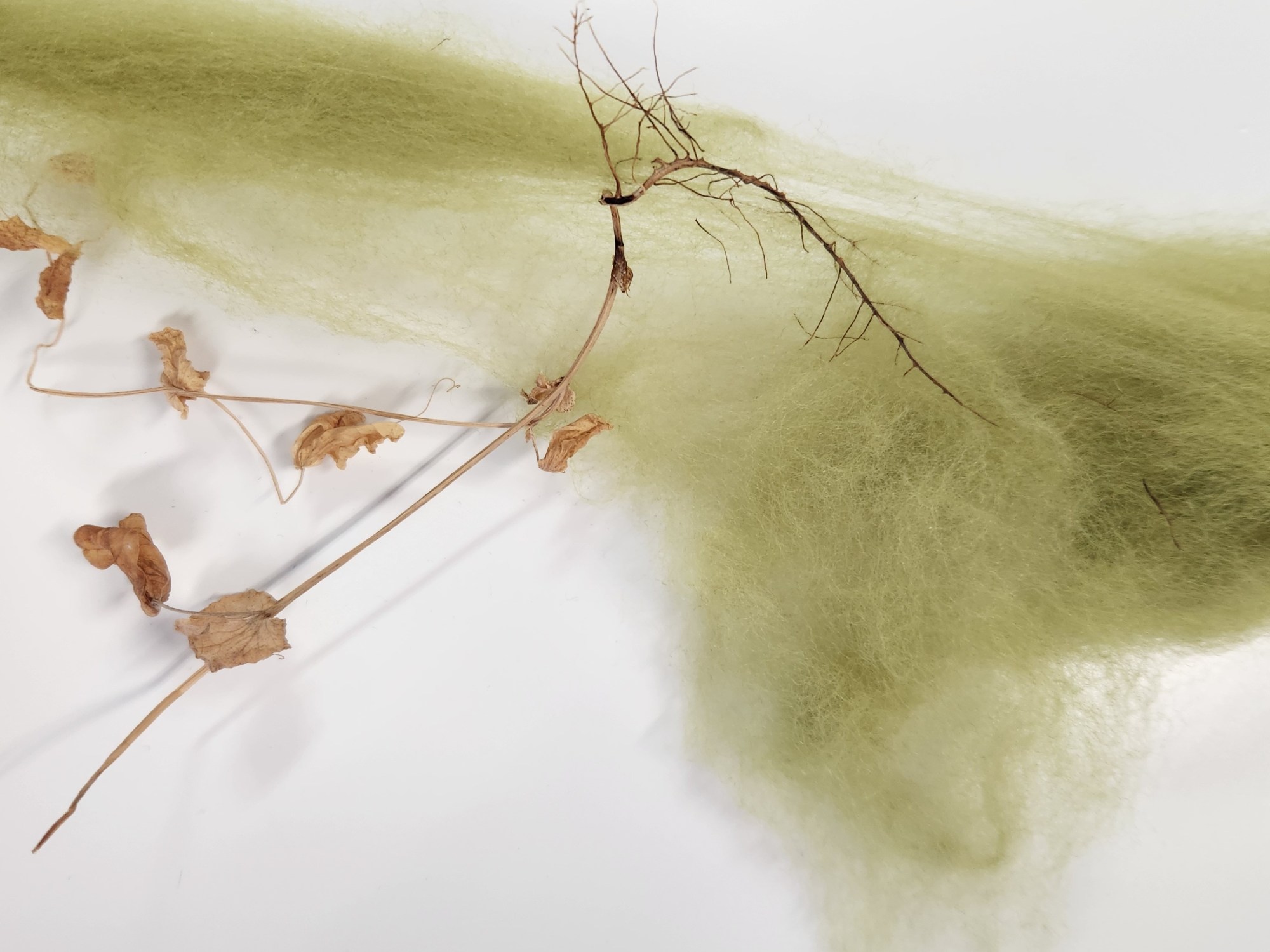
Plant roots can be utilised as a textile or embroidery technique, where patterns resembling plant roots are stitched onto fabric, symbolising connection, grounding, and growth. Commonly found in contemporary embroidery or fibre art, it may also represent reconnection with land or community. In rare instances, it involves incorporating plant-based materials into fabric, primarily in niche applications within natural fibre arts or experimental fashion.
However, one of my notable projects is “Roots Stitching,” a bioart installation that explores the agency of plant roots in textile creation. In this work, sunflower seedlings were allowed to grow through layers of Finnish lambswool, effectively “stitching” the material together with their roots. The resulting biotextile tapestry showcases the intricate patterns formed by the roots, symbolising the interconnectedness of life and the environment. Frontiers
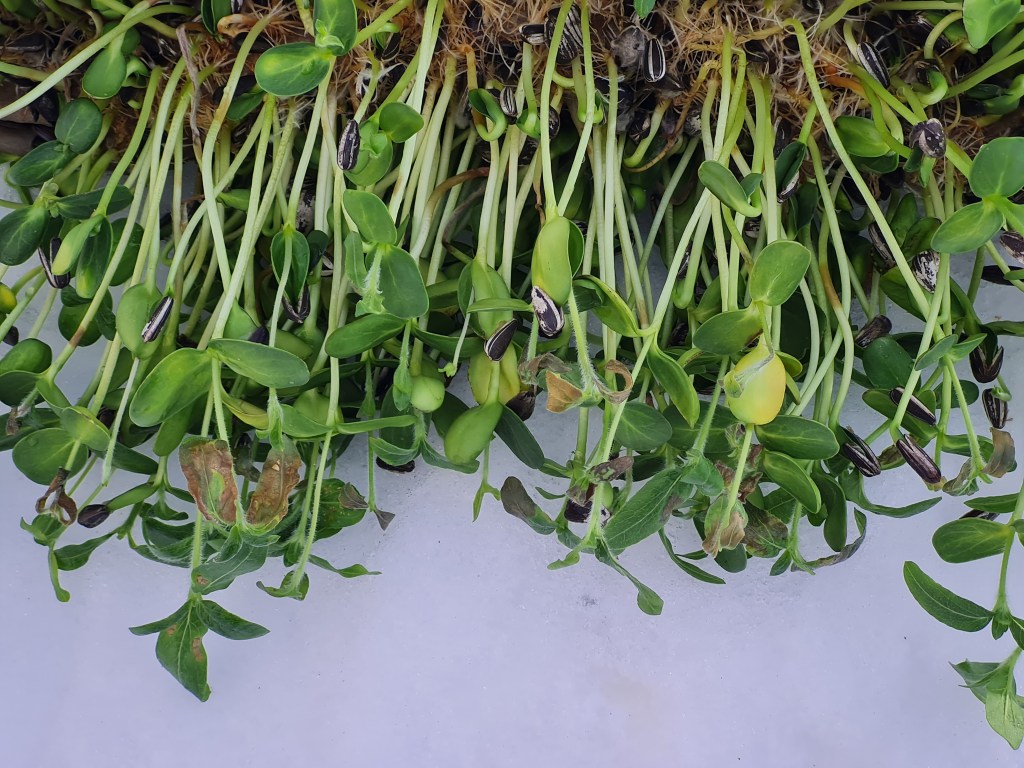
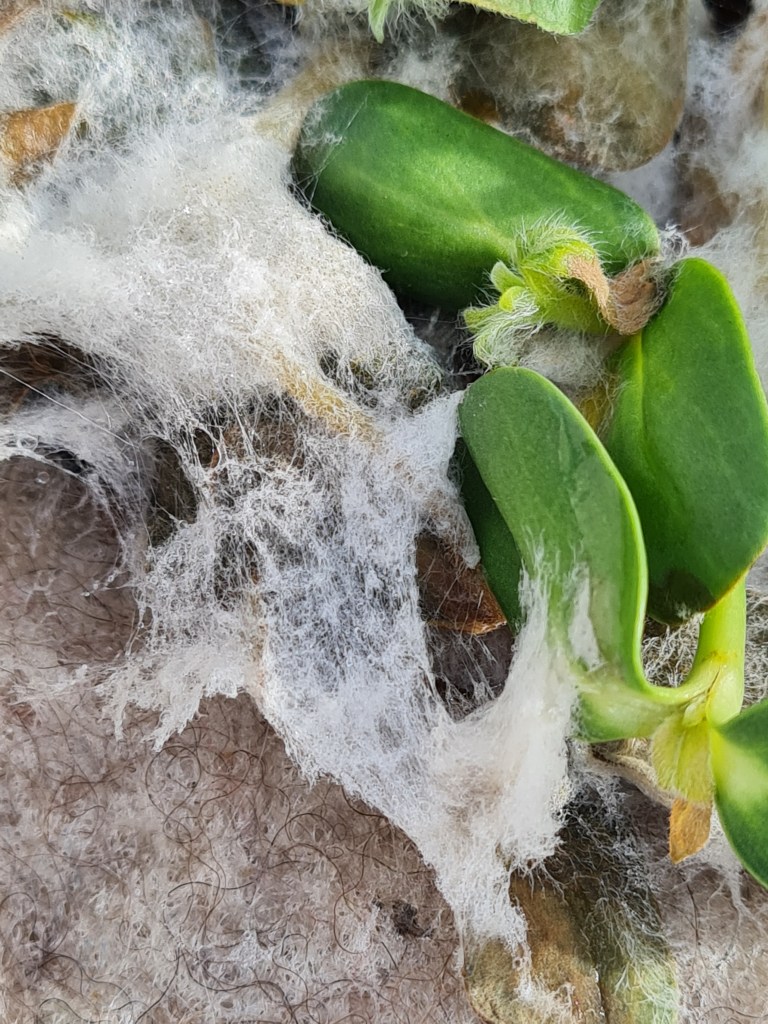
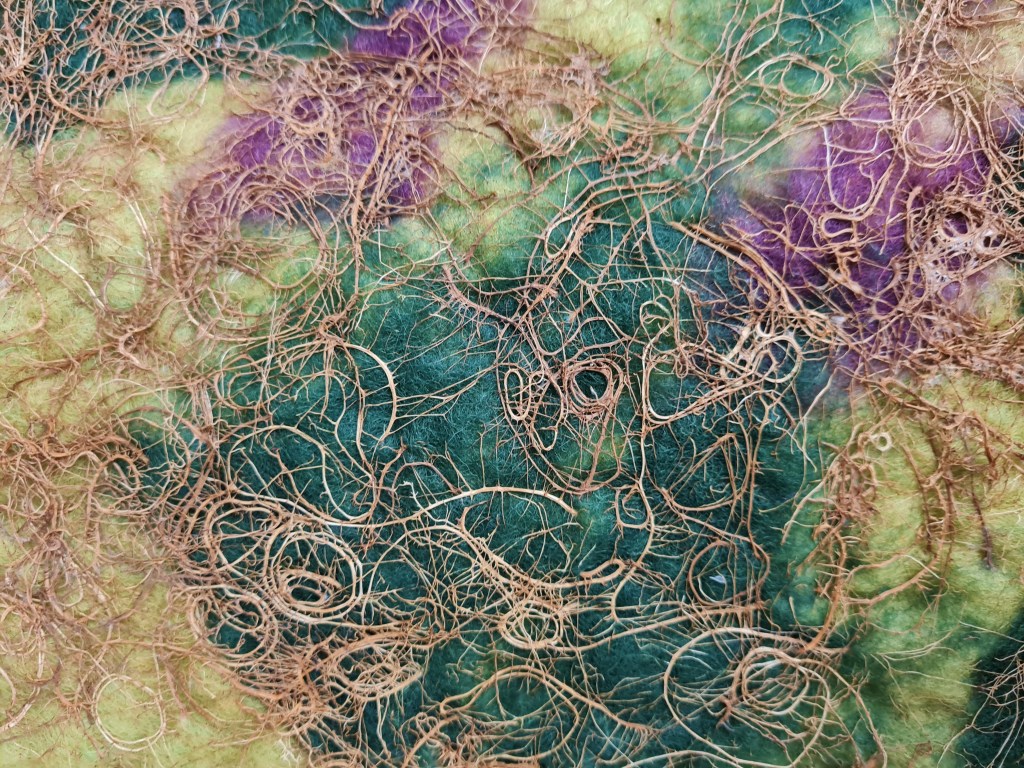
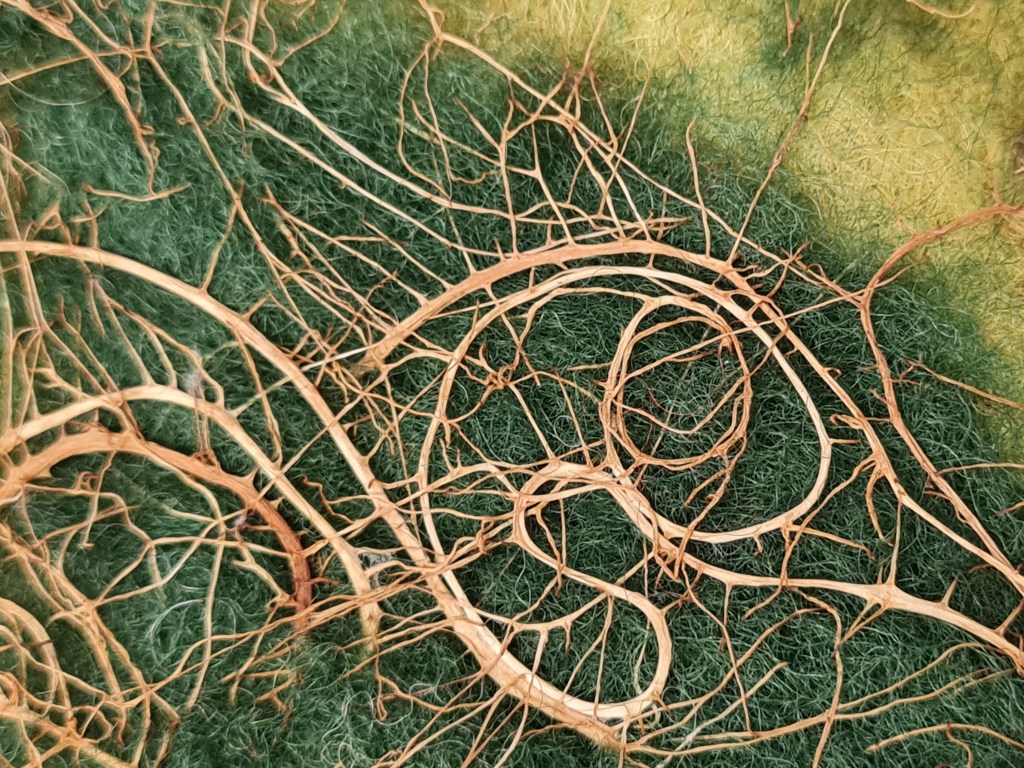

Can roots make a tapestry? The strength of the interconnections of the roots with the wool is astounding! Image by Melanie Sarantou.
Since 2020, I have moved into the margins of academia and textile practice. Through my curiosity, I wanted to discover the agency of plant roots. I was wondering: ‘If they can grow through cardboard, surely they can stitch.’ The idea emerged: How could roots stitch tapestries? When provided with wool, surely they can!
My experiments in the BioARTech Laboratory at the University of Lapland were born out of the need to cohabitate in my living space while I was in lockdown in Arctic Rovaniemi in 2020. A lonely Christmas time without my loved ones led me to buy birdseed from the local supermarket, which I grew on cardboard on my cold windowsill in the living room. To my surprise, despite placing the more-than-humans in the coldest part of the room, the seedlings soon sprouted. But they also started to grow through the cardboard box on which I placed them to protect them from the cold. I observed homeless people in Adelaide and Johannesburg sleeping on cardboard, and from this knowledge, I chose cardboard as a protective material for the seedlings.
I was astounded. The next step: Give them Finnish lamb’s wool. It will be comfortable, soft and warm. The roots stitched biotextiels, and tapestries were born.
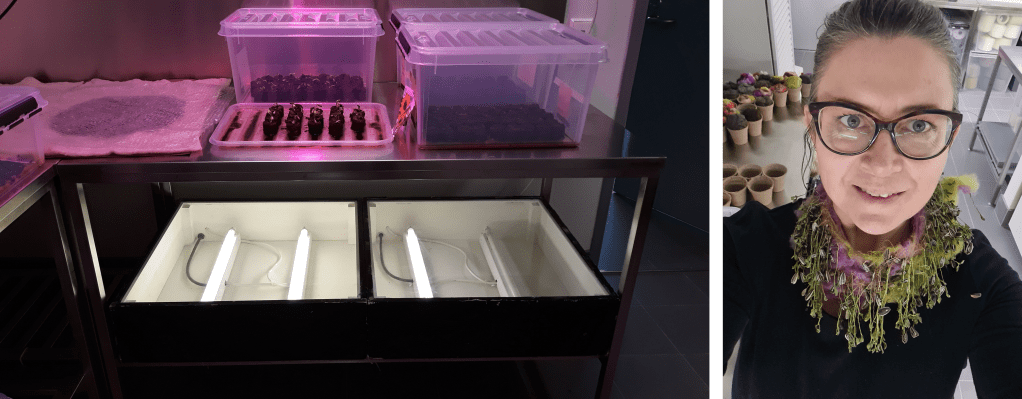
Various growth experiments at the BioARTech Laboratory (2020-2022). Some accessory experiments were prototyped. Images by Melanie Sarantou.
By Melanie Sarantou
 margintomargin