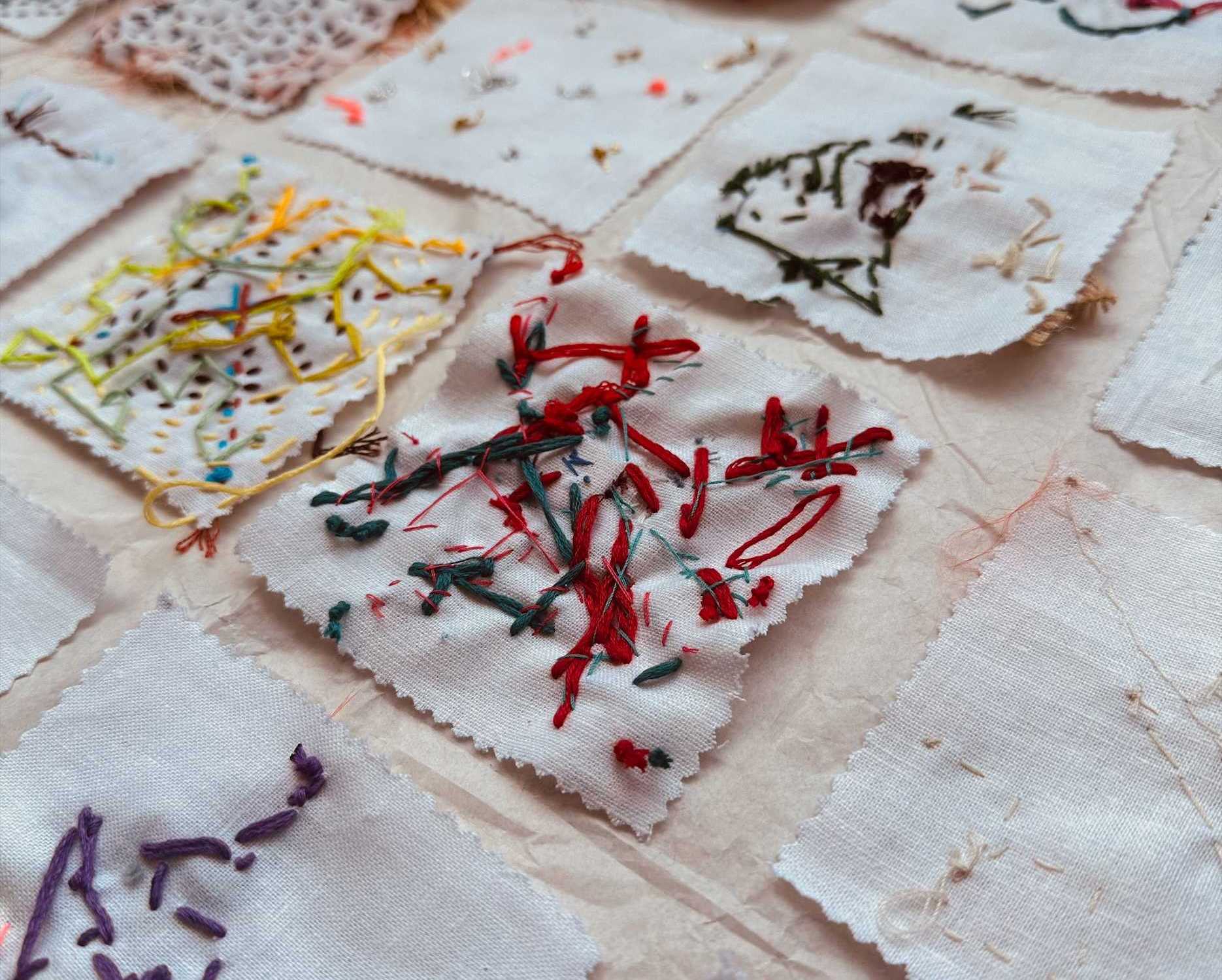
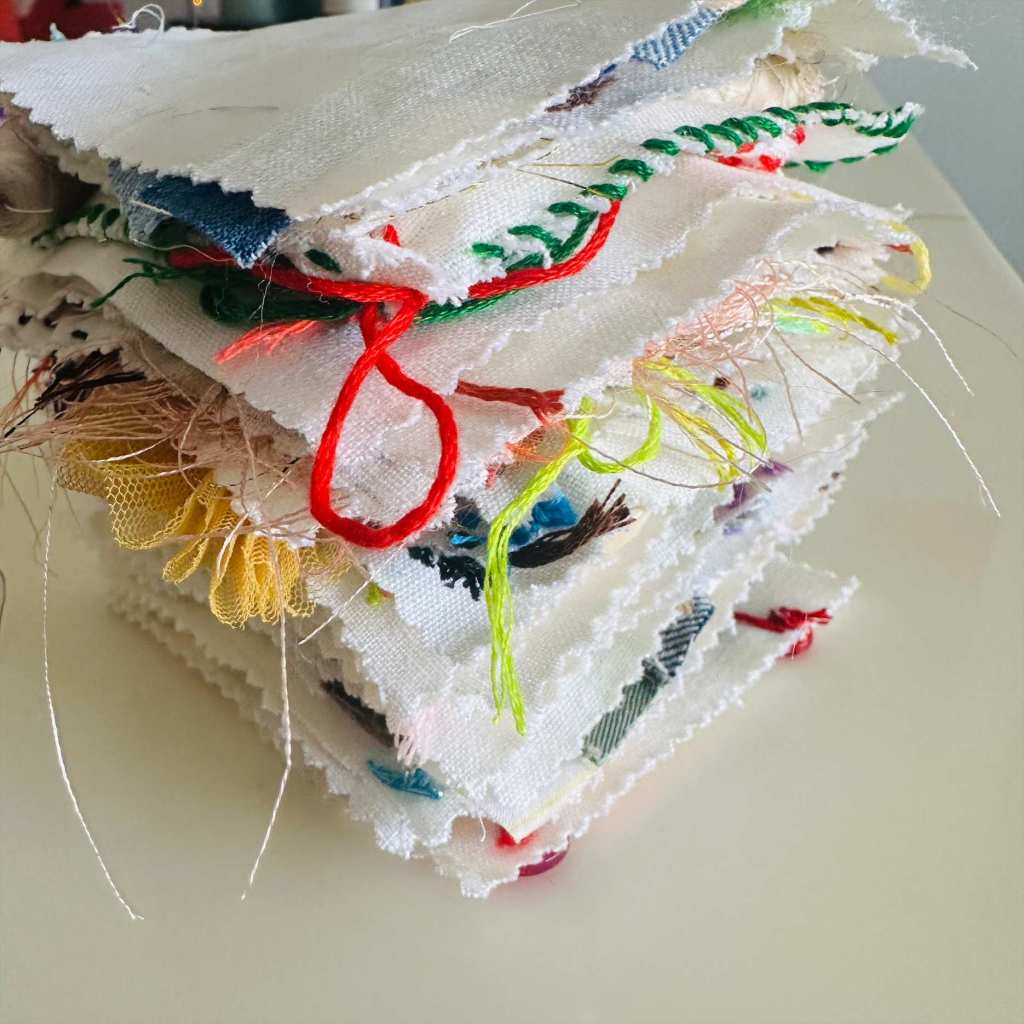
Textiles Cartographies Guangzhou, China. Image by Anne Ting (2024).
The Textile Cartographies project embodies a heartfelt commitment to global participation, bringing people together through the rich tapestry of textile arts as a powerful means of storytelling. Coordinated by the APECV Research Group on Arts, Community, and Education (GriArCE), this inspiring initiative, spanning 2021-2026, unites over 31 diverse groups across 21 countries. It includes warm-hearted participants from universities, schools, collectives, and NGOs, weaving connections across the Americas, Africa, Asia, Australia, and Europe.
More than 250 people participated in Textiles Cartographies in Japan. Countries represented in the exhibition at the Design Library Reading Hall of the Ohashi Campus of Kyushu University were: Australia, Brazil, China, Cyprus, Finland, Japan, Namibia, the Netherlands, Norway, Portugal, South Africa, Spain, Ukraine, and the USA. The exhibition was accompanied by a 3-hour hybrid seminar held in the Reading Hall on January 20, 2025. Eight international speakers participated in creating dialogue around the topic of peace.
The project was coordinated by Melanie Sarantou, Emi Sakai, Heidi Pietarinen and Anne Ting, with four research students from the Strategic Design Course, Yuni, Yiss, Jind and Yuqi. We also thank Naoko Hamabe from the Geiko International Office for her tremendous support.

Installation with over 250 textile contributions sent by participants from 14 countries. The exhibition was hosted at the Reading Hall, Ohashi Campus, Kyushu University. Image by Yiss (2025).
Purpose and Methodology
The project’s primary aim is to uplift the voices of marginalised and peripheral communities by thoughtfully exploring vital issues such as environmental degradation, climate justice, social equity, and sustainability through heartfelt textile-based visual narratives. Participants are invited to create textile pieces—like embroidered squares, woven panels, or fabric collages—that beautifully express their personal and collective experiences tied to their environment and identity. These individual artworks are then lovingly brought together into larger installations, forming “cartographies” that honour and illuminate the rich tapestry of diverse stories and perspectives.
Global Reach and Local Engagement
By April 2025, an inspiring community of around 6,000 individuals had come together to engage in Textile Cartographies activities, lovingly organised by local coordinators across various settings, including museums, schools, universities, cultural sites, and social or healthcare organisations. In Japan, for example, the DESIS-Q laboratory at Kyushu University’s Faculty of Design has played a pivotal role, passionately coordinating seminars and workshops that enrich the project’s global tapestry.
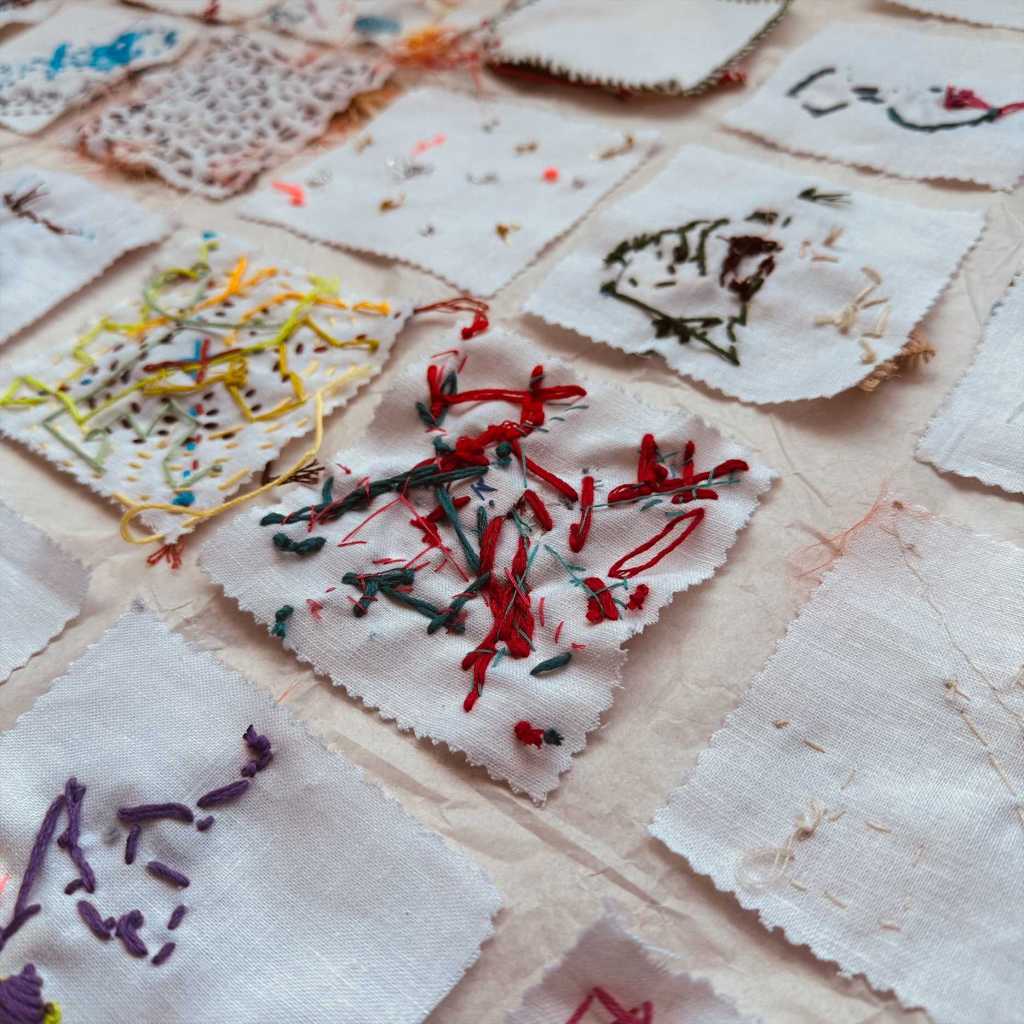
Textile cartographies by participants from Guangzhou, China. Image by Anne Ting (2025).
Educational and Reflective Impact
Beyond artistic expression, the project serves as a nurturing platform for educational and reflective practices. It warmly invites participants to explore and critically examine their relationship with their surroundings, fostering a deep sense of belonging and encouraging heartfelt discussions on social and environmental issues. This compassionate approach aligns beautifully with transdisciplinary educational methodologies, integrating art, technology, and sustainability goals to promote reflective thinking and meaningful social engagement.
For more detailed information, including how to get involved or explore past exhibitions and publications, you can visit the official Textile Cartographies website: https://textilecartographies.weebly.com/.
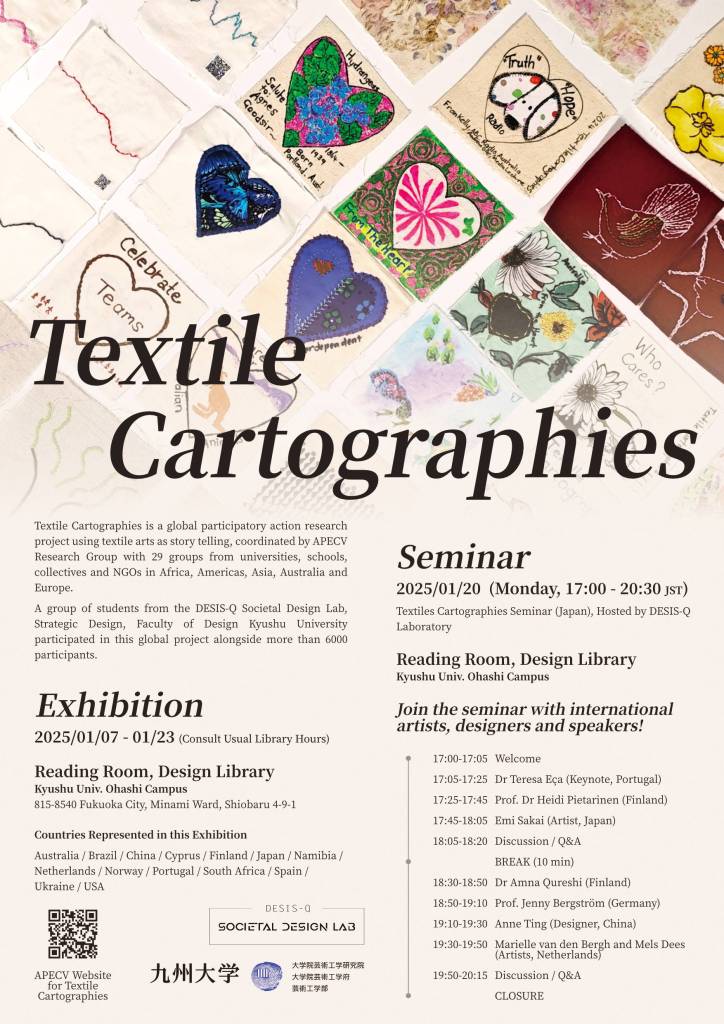
Project Poster created by Yuqi (2025).
 margintomargin